Mn Income Tax Refund
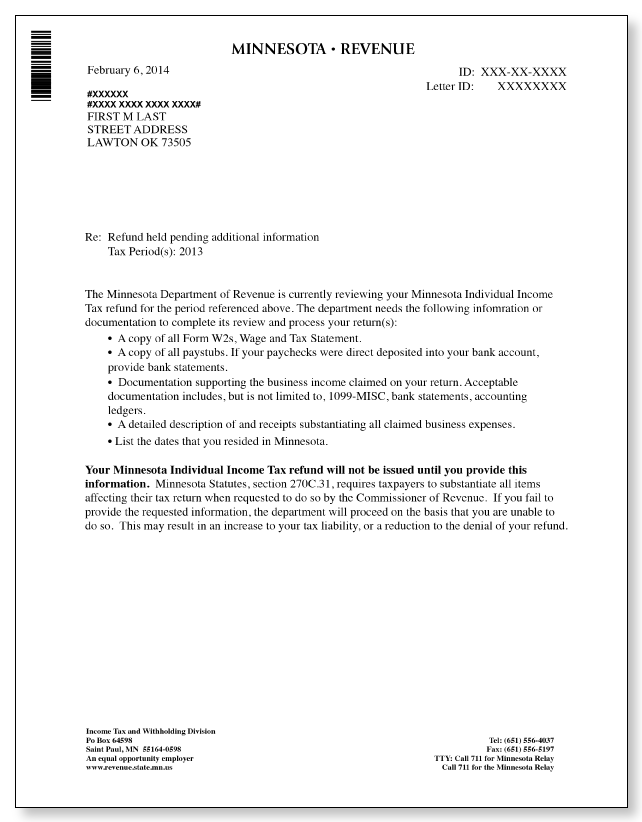
Mn Income Tax Refund. Find information on how to file and pay your taxes, access free tax preparation assistance, and track your refund. Note, if no taxes are withheld due to the refund amount being less than $4,000, you may still owe taxes based on other income.
Income is a value in money that can provide savings and consumption opportunities to an individual. However, income can be difficult to conceptualize. Therefore, the definition of income can be different based on the subject of study. Within this essay, we will look at some key elements of income. We will also discuss interest payments and rents.
Gross income
It is defined as the amount of your earnings before taxes. While net income is the sum of your earnings, minus taxes. It is essential to grasp the difference between gross and net income , so that you can correctly report your income. The gross income is the best measure of your earnings due to the fact that it can give you a much clearer understanding of how much you earn.
Gross income is the amount that a company earns before expenses. It lets business owners compare numbers across different seasons and determine seasonality. Managers also can keep on top of sales targets and productivity requirements. Understanding how much businesses make before their expenses is crucial to managing and making a profit for a business. It can assist small-scale business owners see how they're performing in comparison to other businesses.
Gross income is calculated by product or company basis. For example, a company can determine its profit by the product with the help of tracking charts. If a product has a good sales so that the company can earn more revenue than a company with no products or services. It can assist business owners determine which products they should concentrate on.
Gross income is comprised of dividends, interest rentals, dividends, gambling winners, inheritances, as well as other sources of income. But, it doesn't include deductions for payroll. When you calculate your earnings ensure that you subtract any taxes that you are required to pay. Furthermore, your gross revenue should not exceed your adjusted earning capacity, the amount you will actually earn after you have calculated all the deductions that you've made.
If you're employed, you probably know what your earnings are. In most cases, the gross income is the sum your salary is before tax deductions are deducted. The information is available on your pay statement or contract. If you don't have the documents, you can order copies.
Net income and gross earnings are critical to your financial situation. Knowing and understanding them will aid you in creating your budget and plan for the future.
Comprehensive income
Comprehensive income measures the change in equity over the course of time. The measure does not account for changes in equity due to private investments by owners and distributions to owners. It is the most commonly used measure to measure the performance of companies. This is an important element of an entity's profitability. Therefore, it's crucial for business owners to get the significance of this.
Comprehensive income will be described in the FASB Concepts statement no. 6. It covers change in equity from sources apart from the owners of the company. FASB generally follows this all-inclusive income concept, however it occasionally has made exceptions that require reporting of the change in assets and liabilities in the operation's results. These exceptions are explained in the exhibit 1 page 47.
Comprehensive income includes financial costs, revenue, tax expenditures, discontinued operations including profit shares. It also includes other comprehensive earnings, which is the difference between net income that is reported on the income statement and comprehensive income. Additional comprehensive income includes unrealized gains on securities that are available for sale and derivatives being used as cashflow hedges. Other comprehensive income includes the gains from defined benefit plans.
Comprehensive income is a method for companies to provide stakeholders with additional data about their business's performance. Like net income however, this measure also includes unrealized holding gains and foreign currency translation gains. Although these are not part of net income, they're crucial enough to include in the statement. Additionally, it provides more comprehensive information about the equity of the company.
Comprehensive income also includes unrealized gains and losses from investments. The reason for this is that the value of equity in the company could fluctuate over the period of reporting. However, this amount is not included in computation of the net profit, since it isn't directly earned. The difference in value is reflected by the credit section in the balance sheet.
In the future The FASB continues to improve its guidelines and accounting standards and will be able to make comprehensive income a better and more comprehensive measure. The objective is to provide further insights into the operation of the company and improve the ability to predict future cash flows.
Interest payments
Interest income payments are taxed at ordinary Income tax rates. The interest income is added to the total profit of the business. But, the individual also has to pay tax on this earnings based on the tax rate they fall within. As an example, if small cloud-based business takes out $5000 on December 15 It would be required to pay $1,000 in interest on the 15th of January in the following year. This is a large sum to a small business.
Rents
As a property owner I am sure you've heard of the idea of rents as a source of income. What exactly are rents? A contract rent is a term used to describe a rate that is agreed upon between two parties. It could also refer the extra income that is made by a property owner that isn't obligated to do any extra work. For example, a producer with monopoly rights might charge greater rent than his competitor although he or isn't required to do any additional work. Also, a difference rent is an additional revenue that is earned due to the fertileness of the land. It usually occurs in areas of intensive agricultural practices.
Monopolies also pay quasi-rents until supply is equal to demand. In this instance, there is a possibility to expand the definition of rents across all types of monopoly profit. However, there is no rational limit for the concept of rent. It is important to note that rents can only be profitable when there's no shortage of capital in the economy.
There are also tax implications for renting residential properties. In addition, the Internal Revenue Service (IRS) does not make it easy to rent residential homes. The question of whether or not renting can be an income source that is passive is not simple to answer. The answer is contingent on a variety of factors, but the most important aspect is your involvement throughout the course of the transaction.
In calculating the tax implications of rental income, you must to think about the risk from renting out your home. It's not a guarantee that you will always have tenants and you may end finding yourself with an empty home and not even a dime. There are other unplanned expenses, like replacing carpets or fixing drywall. Even with the dangers it is possible to rent your house out to be a great passive income source. If you're able maintain the expenses low, renting could be a great way in order to retire earlier. It is also a good option to use as an insurance against rising prices.
While there are tax issues associated with renting a property It is also important to understand that rental income is treated differently to income earned via other source. It is essential to consult an accountant or tax professional if you plan on renting a property. Rental income can consist of pet fees, late fees and even any work performed by the tenant to pay rent.
Amount of refund requested when filing individual income tax. Minnesota has a new online secure. We offer information and resources to help individuals:
Please Be Advised That This Application Can Only Be Used For Inquires Related To Individual Income Refunds.
How do i check my mn. You can call our automated phone line at 651‑296‑4444 or 1‑800‑657‑3676 to get the status of your refund. If you have an expired income tax refund check, mail it along with a written request to reissue it to:
Minnesota Has A New Online Secure.
For income and property tax. The state of minnesota sends out income tax refunds very quickly. To enable credit of refund directly to the bank account, taxpayer's bank a/c, micr code/ifsc code of bank branch and correct communication address is mandatory.
Kadrlik Says The Minnesota Department Of Revenue Has Processed About 220,000 Tax Returns So Far, But There's Still A Long Way To Go.
Before the official 2022 minnesota income tax rates are released, provisional 2022 tax rates are based on minnesota's 2021 income tax brackets. Use our where’s my refund? Contact us taxpayer rights privacy & security use of information link policy
Most Purchases Qualify To Reduce Your Income Tax And May Provide A Larger.
Minnesota department of revenue mail. Find information on how to file and pay your taxes, access free tax preparation assistance, and track your refund. We offer information and resources to help individuals:
Free Income Tax Filing And Help.
You can get your refund up to 30 days earlier if. Note, if no taxes are withheld due to the refund amount being less than $4,000, you may still owe taxes based on other income. Minnesota individual income tax applies to residents and nonresidents who meet the state's minimum filing requirements.
Post a Comment for "Mn Income Tax Refund"