Non Controlling Interest Income Statement
Non Controlling Interest Income Statement. Reporting entities should present any noncontrolling interest (nci) as a separate component of stockholders' equity, distinct from the equity. And sub co.’s financials 100% as long as parent co.
Income is a monetary value that provides consumption and savings opportunities for an individual. However, income is not easy to define conceptually. This is why the definition of income will vary based on the field of study. For this post, we'll review some key elements of income. We will also look at rents and interest payments.
Gross income
In other words, gross income represents the amount of your earnings after taxes. Net income, on the other hand, is the total amount of your earnings after taxes. It is essential to comprehend the difference between gross and net income , so that it is possible to report accurately your income. Net income is the more reliable indicator of your earnings because it will give you a better view of the amount of money your earnings are.
Gross income is the total amount that a business makes before expenses. It lets business owners compare sales over different periods and establish seasonality. Managers can also keep track of sales quotas and productivity needs. Knowing how much money a business makes before expenses is crucial for managing and creating a profitable business. It allows small-scale businesses to evaluate how well they're performing compared to their competitors.
Gross income is calculated in a broad company or on a specific product basis. For instance a business can determine its profit by the product with the help of tracker charts. If a particular product is well-loved and the business earns a profit, it will have higher profits than a business that does not have products or services. This could help business owners select which products to be focused on.
Gross income includes interest, dividends rent income, gambling wins, inheritances, and other income sources. But, it doesn't include deductions for payroll. When you calculate your income ensure that you remove any taxes you're expected to pay. Additionally, your gross income must not exceed your adjusted gross revenue, which represents the amount you actually take home when you've calculated all of the deductions that you've made.
If you're salaried, you probably know what your total income would be. In most instances, your gross income is the amount you are paid before tax deductions are made. The information is available in your pay-stub or contract. When you aren't able to find this information, you can ask for copies of it.
Net income and gross income are important parts of your financial life. Understanding and understanding them can help you develop a strategy for the coming year and create a budget.
Comprehensive income
Comprehensive income refers to the total amount in equity over the course of time. This measurement excludes changes to equity due to investing by owners and distributions made to owners. This is the most widely employed measure to assess the performance of business. This revenue is an significant aspect of an enterprise's financial success. Therefore, it is crucial for business owners to grasp the importance of it.
Comprehensive income can be defined by the FASB Concepts statement no. 6. It covers variations in equity from sources other than owners of the business. FASB generally follows the concept of an all-inclusive income but occasionally it has made exceptions that require reporting of variations in assets and liabilities in the results of operations. These exceptions are explained in the exhibit 1 page 47.
Comprehensive income comprises revenues, finance costs, taxes, discontinued operations, including profit shares. It also includes other comprehensive earnings, which is the difference between net income included in the income report and the total income. Additionally, other comprehensive income includes unrealized gains on securities that are available for sale and derivatives in cash flow hedges. Other comprehensive income may also include the gains from defined benefit plans.
Comprehensive income is a way for businesses to provide the public with more information regarding the profitability of their operations. Much like net income, this measure also includes non-realized gains from holding and gains from translation of foreign currencies. Although these aren't included in net income, they are important enough to include in the report. Additionally, it gives the most complete picture of the equity of the company.
Comprehensive income also includes unrealized gains and losses from investments. This is because of the fact that the worth of the equity of an enterprise can change during the period of reporting. But, it does not count in the determination of the company's net profits, because it's not directly earned. The difference in value is reported on the financial statement in the section titled equity.
In the future the FASB remains committed to refine its accounting guidelines and guidelines, making comprehensive income a more thorough and crucial measure. The aim is to provide further insights into the operation of the company and enhance the ability of forecasting the future cash flows.
Interest payments
Income interest payments are taxed according to the normal marginal tax rates. The interest income is added to the overall profit of the company. However, individuals have to pay tax upon this income based upon your tax bracket. In the example above, if a small cloud-based business takes out $5000 on the 15th of December then it will have to pay interest of $1,000 on the 15th day of January of the following year. This is a huge number to a small business.
Rents
As a home owner Perhaps you've had the opportunity to hear about rents as a source of income. What exactly are rents? A contract rent refers to a rent which is agreed upon by two parties. It could also be used to refer to the additional income obtained by a homeowner that isn't obligated to complete any additional tasks. For instance, a producer who is monopoly may charge more rent than a competitor while he/she they don't need to do any extra tasks. The same applies to differential rents. is an additional revenue that is generated due to the fertileness of the land. It's usually the case under intensive agriculture of the land.
A monopoly may also earn quasi-rents until supply catches up to demand. In this instance, it's possible to expand the meaning of rents to all kinds of profits from monopolies. However, there is no reasonable limit to the definition of rent. It is important to know that rents can only be profitable when there's a excess of capital available in the economy.
Tax implications are also a factor with renting residential properties. This is because the Internal Revenue Service (IRS) does not provide the necessary tools to rent residential property. So the question of whether or not renting constitutes a passive source of income isn't an easy one to answer. The answer depends on several aspects but the main one is the level of your involvement with the rental process.
In calculating the tax implications of rent income, it is necessary to be aware of the potential risks of renting out your property. This isn't a guarantee that you will always have renters so you could end up with an empty home and not even a dime. There are other unplanned expenses such as replacing carpets patching holes in drywall. In spite of the risk involved renting your home can provide a reliable passive source of income. If you can keep costs low, it can be a great option in order to retire earlier. This can also act as security against inflation.
While there are tax implications for renting property and you need to be aware rentals are treated differently from income earned on other income sources. You should consult an accountant or tax attorney for advice if you are considering renting a home. Rents can be a result of late fees, pet fee, and even work performed by the tenant as a substitute for rent.
Say, for example, zee ltd wants to acquire 60% of equity shares of b ltd so in this case,. On the cash flow statement, you still combine parent co. And sub co.’s financials 100% as long as parent co.
And Sub Co.’s Financials 100% As Long As Parent Co.
But there are two required adjustments: Compute the goodwill allocation to the controlling and noncontrolling interest. In its consolidated balance sheet to present a claim on assets by minority shareholders or in its consolidated.
Show How Parflex Determined Its “Investment In Eagle” Account Balance.
Noncontrolling interest (nci) is the portion of equity ownership in a subsidiary not attributable to the parent company, who has a controlling interest (greater than 50% but less than 100%) and. On the cash flow statement, you still combine parent co. The total comprehensive income for the period must be disclosed in the statement of changes in equity, showing separately the total amounts attributable to owners of the parent.
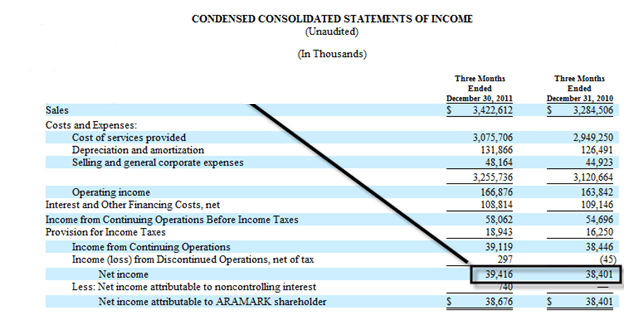
Again, Using The 25% Minority Interest Percentage, And An Assumed Net Income Of $1 Million, We Calculate Our Minority Income As 25% X $1 Million = $250,000.
Us business combinations guide 6.1. In the consolidated income statement, only income and expenses of subsidiaries accumulated after the date of the merger are recognised in the consolidated income. Say, for example, zee ltd wants to acquire 60% of equity shares of b ltd so in this case,.
Post a Comment for "Non Controlling Interest Income Statement"