Coverdell Esa Income Limit
Coverdell Esa Income Limit. Your coverdell esa funds can be used for specific purposes; The money that’s over the limit plus.
The term "income" refers to a financial value that offers savings and consumption opportunities for an individual. It is, however, difficult to define conceptually. Therefore, the definitions of income could differ depending on the research field. For this post, we'll look at some key elements of income. We will also look at rents and interest payments.
Gross income
Gross income is the total amount of your earnings before taxes. On the other hand, net income is the total amount of your earnings, minus taxes. It is essential to comprehend the difference between gross and net income so that it is possible to report accurately your earnings. It is a better gauge of your earnings as it offers a greater understanding of how much your earnings are.
Gross income refers to the amount that a company earns before expenses. It lets business owners compare results across various times of the year and establish seasonality. It also allows managers to keep the track of sales quotas as well as productivity needs. Knowing how much businesses make before their expenses is vital to managing and making a profit for a business. It can help small-scale business owners examine how well they're faring in comparison to their rivals.
Gross income can be calculated by product or company basis. For instance, companies could calculate profit by product with the help of tracking charts. If a particular product is well-loved, the company will have an increased gross profit in comparison to companies that have no products or services at all. This can help business owners select which products to be focused on.
Gross income includes interest, dividends rental income, casino gains, inheritances and other income sources. However, it does not include deductions for payroll. When you calculate your earnings ensure that you subtract any taxes you're legally required to pay. Furthermore, your gross revenue should not exceed your adjusted revenue, which represents what you get after you have calculated all the deductions you've made.
If you're salaried you probably already know what your gross income is. The majority of times, your gross income is the sum your salary is before taxes are deducted. The information is available on your paycheck or contract. If there isn't the document, you can request copies of it.
Net income and gross income are essential to your financial situation. Understanding and interpreting them can help you create a schedule for your budget as well as planning for the next.
Comprehensive income
Comprehensive income measures the change in equity during a specified period of time. It does not include changes in equity resulting from the investments of owners as well as distributions to owners. It is the most commonly utilized method to gauge the performance of companies. This kind of income is an important aspect of a company's profit. Therefore, it's important for business owners to learn about the importance of it.
Comprehensive Income is described in the FASB Concepts & Statements No. 6. It is a term that includes any changes in equity coming from sources different from the owners the business. FASB generally follows this idea of all-inclusive income but it may make exceptions that require reporting changes in liabilities and assets in the operations' results. These exceptions are described in exhibit 1, page 47.
Comprehensive income is comprised of revenues, finance costs, tax expenses, discontinued operations, along with profit share. It also comprises other comprehensive income, which is the distinction between net income as which is reported on the income statements and the comprehensive income. In addition, other comprehensive income includes unrealized gain in the form of derivatives and available-for-sale securities in cash flow hedges. Other comprehensive income may also include gains on actuarial basis from defined benefit plans.
Comprehensive income can be a means for companies to provide stakeholders with additional data about their earnings. Unlike net income, this measure is also inclusive of unrealized holding gains and gains in foreign currency translation. Although these aren't part of net earnings, they are nevertheless significant enough to include in the balance sheet. In addition, it provides fuller information on the equity of the company.
Comprehensive income also includes unrealized gains and losses on investments. This is because of the fact that the worth of the equity of a business may change during the reporting period. The equity amount isn't included in the formula for calculating net income, as it is not directly earned. The difference in value is reflected at the bottom of the balance statement, in the equity category.
In the coming years as time goes on, the FASB may continue refine its accounting guidelines and guidelines which will make comprehensive income a more comprehensive and vital measure. The goal is to provide further insights into the operations of the business and increase the capacity to forecast the future cash flows.
Interest payments
Earnings interest are taxed at normal personal tax rates. The interest earnings are added to the overall profit of the company. However, individuals must to pay taxes from this revenue based on your tax bracket. In the example above, if a tiny cloud-based software firm borrows $5000 on December 15 and has to be liable for interest of $1,000 on the 15th day of January of the next year. This is a huge number in the case of a small business.
Rents
As a home owner I am sure you've seen the notion of rents as a source of income. But what exactly are rents? A contract rent is one which is decided upon between two parties. It could also refer to the additional revenue attained by property owners and is not required to do any additional work. For example, a company that is monopoly might be charged the same amount of rent as a competitor however he or has no obligation to complete any additional work. Equally, a different rent is an extra profit resulted from the soil's fertility. It is usually seen in the context of extensive agriculture of the land.
A monopoly also can earn quasi-rents until supply is equal to demand. In this instance the possibility exists to extend the definition for rents to include all forms of monopoly-related profits. However, it is not a rational limit for the concept of rent. It is crucial to remember that rents are only profitable when there is a supply of capital in the economy.
There are also tax implications when renting residential property. It is important to note that the Internal Revenue Service (IRS) does not provide the necessary tools to rent residential properties. The question of whether or not renting is an income stream that is passive isn't an easy one to answer. The answer depends on numerous aspects However, the most crucial aspect is your involvement within the renting process.
In calculating the tax implications of rental income, you need to take into account the potential risk of renting your home out. This isn't a guarantee that you will always have tenants but you could end with a house that is vacant and no revenue at all. There are also unforeseen expenses which could include replacing carpets as well as repair of drywall. In spite of the risk involved, renting your home can make a great passive source of income. If you're able, you keep costs down, renting can provide a wonderful way to begin retirement earlier. It also can be security against inflation.
While there are tax issues for renting property however, it is important to know rent is treated differently than income out of other sources. You should consult the services of a tax accountant or attorney when you are planning to rent a home. Rental income can comprise pet fees, late fees and even work carried out by the tenant to pay rent.
Funds must be distributed to the beneficiary by age 30 or the account owner will face penalties. You can contribute to a coverdell esa even if you don’t have earned income. While the coverdell has a lower $2,000 annual contribution limit,.
You May Be Able To Contribute To A Coverdell Esa To Finance The Beneficiary's Qualified Education Expenses.
This limits the ability of a grandparent to directly use a u.s. Anyone with earned income that doesn't exceed income limits (under $110k for single filers and under $220k for joint filers) is eligible to contribute to a coverdell esa. A coverdell education savings account (esa) is a special account designed to help pay for your child’s education.
That Limit Is Phased Out If Your Modified Adjusted Gross Income (Magi) Is Between $95,000.
They would need to register the bond in the name of the. This means that if a parent and grandparent each opened a coverdell esa for one child, the total of both accounts can’t exceed $2,000. 529 savings plan contributions vary by state, but in many cases, you can put as much as you want.
Contributions Must Be Made In Cash, And They're Notdeductible.
529 plan contribution limits vary by state,. Your coverdell esa funds can be used for specific purposes; If you file your taxes jointly and your.
Any Individual Can Contribute To A Coverdell Esa, Subject To An Income Limit.
Up to the lesser of (i) $58,000 in 2021/$61,000 in 2022, and (ii) 25% of employee compensation or 20% of net. The limit was $500 before 2002. Beneficiaries must be under the age of 30 to.
While Almost Anyone Can Invest In A 529 Plan, Regardless Of Income, The Ability To Take Advantage Of A Coverdell Esa Phases Out For Parents With Modified Adjusted Gross.
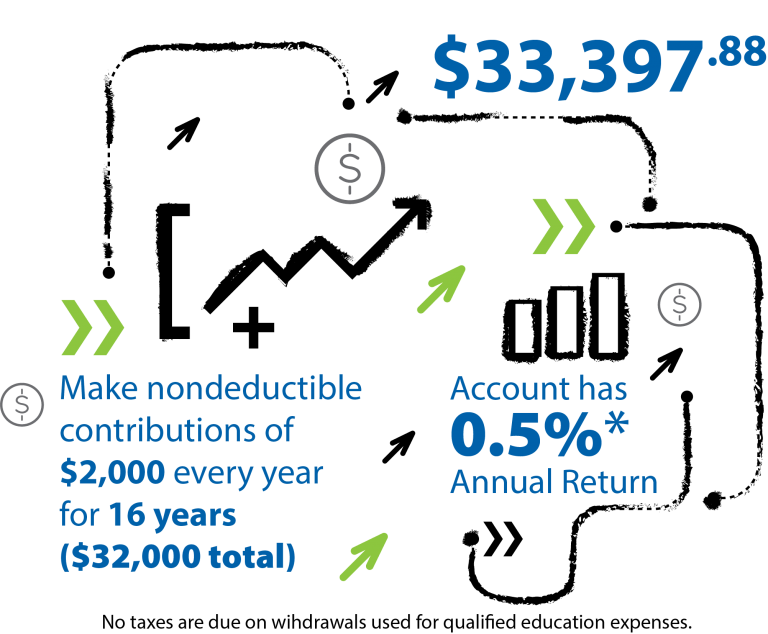
A parent contributing $2,000 each year to a coverdell from when the child is born until. Once the beneficiary reaches age 18 they can take control of the account but funds must be used by the time the. Savings bond to bypass the $2,000 annual contribution limit.
Post a Comment for "Coverdell Esa Income Limit"