What Is A Modified Adjusted Gross Income
What Is A Modified Adjusted Gross Income. These deductions include ira contributions, alimony payments, health savings. Modified adjusted gross income is the amount taxpayers use to determine whether they qualify for certain tax deductions, including the deductibility of contributions to 401 (k),.
Income is a monetary value that can provide savings and consumption opportunities to an individual. It's not easy to conceptualize. So, the definition of income could differ depending on the subject of study. This article we'll review some key elements of income. We will also examine interest payments and rents.
Gross income
Gross income is the total amount of your earnings before taxes. While net income is the sum of your earnings minus taxes. It is essential to grasp the difference between gross and net earnings so that you are able to properly record your income. Gross income is a better measurement of your earnings since it gives you a clearer view of the amount of money your earnings are.
Gross profit is the money the company earns prior to expenses. It allows business owners to analyze the performance of their business over various periods and to determine the seasonality. It also aids managers in keeping track of sales quotas and productivity needs. Understanding how much that a business can earn before expenses is crucial in managing and growing a profitable enterprise. It assists small business owners analyze how they're outperforming their competition.
Gross income is calculated according to a product-specific or a company-wide basis. For instance, companies can determine its profit by the product through charting. If a product is successful in selling, the company will have an increase in gross revenue over a company that doesn't have products or services at all. This helps business owners decide which products to concentrate on.
Gross income includes dividends, interest rent income, gambling results, inheritances and other sources of income. However, it does not include payroll deductions. If you are calculating your income, make sure that you take out any tax you are obliged to pay. The gross profit should not exceed your adjusted gross earning capacity, the amount you will actually earn after figuring out all the deductions you've made.
If you're salariedor employed, you are probably aware of what your net income will be. In the majority of instances, your gross income is what you receive before tax deductions are made. This information can be found on your paycheck or contract. Should you not possess the documents, you can order copies of it.
Gross income and net income are essential to your financial life. Understanding and comprehending them will enable you to create a spending plan as well as plan your financial future.
Comprehensive income
Comprehensive income is the total change in equity over a set period of time. This measure does not take into account changes in equity due to investments made by owners and distributions to owners. It is the most commonly employed method to evaluate the performance of businesses. This income is an vital aspect of an organisation's financial success. Thus, it's essential for business owners be aware of the implications of.
Comprehensive Income is described in the FASB Concepts Declaration no. 6, and it encompasses any changes in equity coming from sources other than the owners the business. FASB generally follows the all-inclusive concept of income however, there have been some exemptions that require reporting the change in assets and liabilities in the financial results. These exceptions are outlined in exhibit 1, page 47.
Comprehensive income comprises the revenue, finance expenses, taxes, discontinued operations along with profit share. It also includes other comprehensive earnings, which is the difference between net income included in the income report and the comprehensive income. Also, the other comprehensive income comprises unrealized gains on the sale of securities and derivatives that are used to create cash flow hedges. Other comprehensive income can also include the gains from defined benefit plans.
Comprehensive income provides a means for businesses to provide clients with additional information regarding their business's performance. In contrast to net income, this measure contains unrealized hold gains and foreign currency exchange gains. While they're not part of net income, they're crucial enough to be included in the report. In addition, it provides a more complete view of the equity of the company.
Comprehensive income also includes unrealized gains and losses on investments. This is because , the value of the equity of a company can change during the period of reporting. The equity amount isn't included in the formula for calculating net income because it's not directly earned. The amount is shown in the equity section of the balance sheet.
In the coming years it is expected that the FASB remains committed to refine its accounting guidelines and standards that will make comprehensive income a better and more comprehensive measure. The objective is to give additional insights into the operations of the business and improve the capability to forecast future cash flows.
Interest payments
Interest payments on income are paid at regular income tax rates. The interest earnings are added to the overall profit of the company. However, individuals must to pay taxes on this income based on your tax bracket. If, for instance, a small cloud-based application company loans $5000 on the 15th of December that year, it must pay interest of $1000 at the beginning of January 15 in the next year. This is a large sum for a small-sized business.
Rents
As a property owner perhaps you have seen the notion of rents as a source of income. What exactly are rents? A contract rent is a term used to describe a rate that is agreed upon between two parties. It may also refer to the additional income received by a property proprietor who is not required to perform any additional work. A producer with monopoly rights might charge a higher rent than a competitor in spite of the fact that he they don't need to do any extra tasks. Also, a difference rent is an additional revenue which is generated by the fertileness of the land. The majority of the time, it occurs during intensive land cultivation.
A monopoly may also earn rents that are quasi-rents until supply can catch up with demand. In this situation, you can extend the definition of rents to all forms of monopoly-related profits. This is however not a legitimate limit on the definition of rent. It is essential to realize that rents can only be profitable when there isn't a excessive capitalization in the economy.
There are tax implications when renting residential homes. For instance, the Internal Revenue Service (IRS) is not a great way to rent residential property. So the question of whether renting is a passive source of income isn't an easy one to answer. The answer is contingent on a variety of factors and one of the most important is the degree of involvement during the entire process.
In calculating the tax implications of rental income, it is important take into consideration the risks when you rent out your home. It's not a sure thing that you'll always have renters, and you could end having a home that is empty with no cash at all. There are also unforeseen expenses for example, replacing carpets and fixing drywall. With all the potential risks in renting your home, it can be a fantastic passive source of income. If you're able maintain the costs as low as possible, renting can be a fantastic way in order to retire earlier. Also, it can serve as an insurance against rising prices.
While there are tax issues related to renting a house You should be aware that rent income can be treated in a different way than income through other means. It is crucial to consult an accountant or tax attorney when you are planning to rent a home. Rent earned can be comprised of late charges, pet fees or even work that is performed by the tenant in lieu rent.
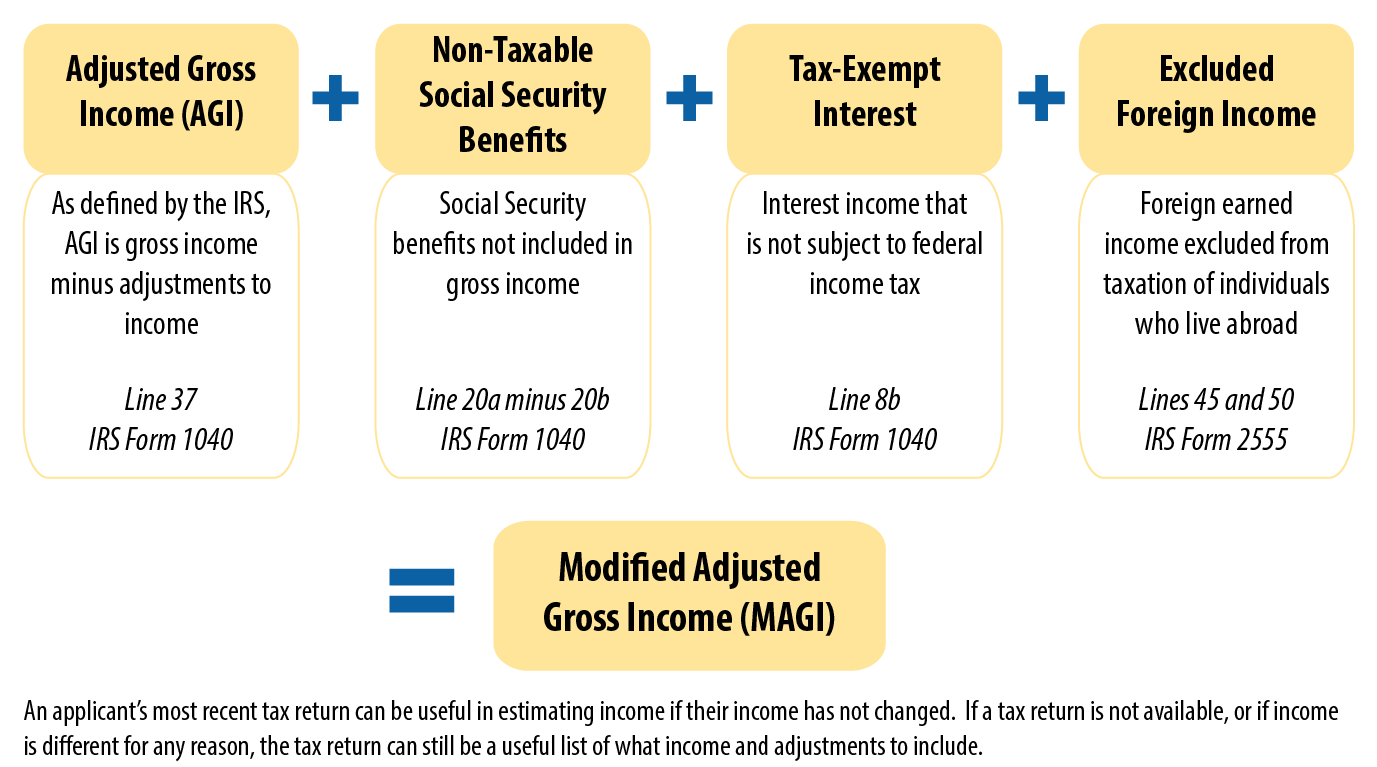
Modified adjusted gross income (magi) is used to determine whether a private individual qualifies for certain tax deductions. Tax definition of modified adjusted gross income. Modified adjusted gross income is the sum of:
Modified Adjusted Gross Income (Magi) Is Used To Determine Whether A Private Individual Qualifies For Certain Tax Deductions.
Modified adjusted gross income (magi) the figure used to determine eligibility for premium tax credits and other savings for marketplace health insurance plans and for medicaid and the. Modified adjusted gross income (magi) is your adjusted gross income (agi) with certain adjustments (modifications) added back in. The beneficiary's adjusted gross income (agi).
These Deductions Include Ira Contributions, Alimony Payments, Health Savings.
Your agi is the total amount of income you make in a year, minus certain expenses that you are allowed to deduct. It includes all the money you earned without any tax deductions figured in. How is modified adjusted gross income for medicare premiums calculated?
Modified Adjusted Gross Income (Magi) Can Qualify You For A Number Of Credits, Benefits, And Exclusions, Which Makes It Important To Calculate For Tax Purposes.
This income calculation is similar. Modified adjusted gross income (magi) in the simplest terms is your adjusted gross income (agi) plus a few items —. The modified adjusted gross income, or magi, is quite significant when it comes to managing your accounts that are utilized to meet all requirements for significant tax benefits.
Adjusted Gross Income (Agi) Adjusted Gross Income Is A Tax Term That Is Used By The Irs.
In the most basic terms, modified adjusted gross income is defined as your adjusted gross income (agi) with certain adjustments added back in. Modified adjusted gross income is the amount taxpayers use to determine whether they qualify for certain tax deductions, including the deductibility of contributions to 401 (k),. After looking at your gross income and adjusted gross income you can easily calculate your modified adjusted gross income.
The Social Security Administration Determines.
Your gross income (gi) is the simplest form of income. If you want to know whether you. Adjusted gross income is your taxable income for the year,.
Post a Comment for "What Is A Modified Adjusted Gross Income"