Average Household Income 1970
Average Household Income 1970. Households having 3 or more vehicles rose from 5.5% in 1970 to 21.9% in 2018. U.s household income shares of quintiles.
A monetary value that gives savings and purchase opportunities for an individual. It's a challenge to conceptualize. Thus, the definition of income can be different based on the subject of study. In this article, we'll explore some important aspects of income. We will also discuss rents and interest.
Gross income
Total income or gross is total sum of your earnings after taxes. On the other hand, net income is the sum of your earnings less taxes. It is essential to grasp the distinction between gross income and net income in order that you can accurately record your earnings. Gross income is a superior indicator of your earnings because it gives you a better idea of the amount you are earning.
Gross income is the revenue that a business earns prior to expenses. It allows business owners and managers to compare the sales of different times and establish seasonality. Managers also can keep the track of sales quotas as well as productivity requirements. Understanding the amount of money that a business can earn before expenses is essential for managing and creating a profitable business. It helps small business owners determine how they are competing with their peers.
Gross income can be determined as a per-product or company-wide basis. For example, a company can determine its profit by the product using tracking charts. If the product is a hit this means that the business will earn more revenue when compared to a business with no products or services. This helps business owners decide which products to concentrate on.
Gross income comprises interest, dividends rental income, casino wins, inheritances, and other sources of income. But, it doesn't include deductions for payroll. If you are calculating your income, make sure that you subtract any taxes you're required to pay. The gross profit should never exceed your adjusted gross net income. It is the amount you get after you have calculated all the deductions you've made.
If you're a salaried employee, you most likely know what your gross income is. In the majority of cases, your gross income is the amount your salary is before tax deductions are taken. This information can be found in your pay-stub or contract. If you're not carrying this document, you can obtain copies.
Gross income and net income are vital to your financial situation. Understanding and comprehending them will enable you to create a forecast and budget.
Comprehensive income
Comprehensive income measures the change in equity throughout a period of time. It does not include changes in equity due to investing by owners and distributions made to owners. It is the most frequently used measure to measure the effectiveness of businesses. The income of a business is an crucial element of an organization's financial success. Therefore, it is crucial for business owners to be aware of the importance of it.
Comprehensive income is defined by the FASB Concepts statement no. 6, and it encompasses changes in equity derived from sources beyond the shareholders of the company. FASB generally adheres to the all-inclusive concept of income however, there have been some exceptions that require reporting the changes in liabilities and assets within the results of operations. These exceptions are discussed in the exhibit 1 page 47.
Comprehensive income includes financing costs, revenue, tax charges, discontinued operation, or profit share. It also includes other comprehensive income which is the distinction between net income as included in the income report and comprehensive income. Also, the other comprehensive income comprises unrealized gains in derivatives and securities which are held as cash flow hedges. Other comprehensive income also includes an actuarial gain from defined benefit plans.
Comprehensive income can be a means for businesses to provide participants with more details regarding their earnings. Different from net earnings, this measure also includes non-realized gains from holding and foreign currency conversion gains. While they aren't included in net income, they are crucial enough to include in the financial statement. Furthermore, it provides more comprehensive information about the company's equity.
Comprehensive income also includes unrealized gains and losses on investments. This is due to the fact that the price of equity of an enterprise can change during the reporting period. However, this amount is not part of the calculation of net income, as it is not directly earned. The variation in value is recorded into the cash section of the account.
In the future and in the coming years, the FASB has plans to improve its accounting standards and guidelines and make the comprehensive income an more comprehensive and vital measure. The aim is to provide additional insights on the business's operations and improve the capability to forecast the future cash flows.
Interest payments
The interest earned on income is impozited at standard income tax rates. The interest earned is added to the total profit of the company. But, the individual also has to pay tax to this income according to their tax bracket. For instance if a small cloud-based technology company borrows $5000 in December 15th this year, it's required to make a payment of $1,000 of interest on January 15 of the following year. That's a big sum in the case of a small business.
Rents
As a homeowner You may have read about rents as an income source. What exactly are rents? A contract rent is a rental that is negotiated between two parties. It may also be a reference to the additional revenue obtained by a homeowner which is not obligated carry out any additional duties. For instance, a monopoly producer might charge an amount that is higher than a competitor however he or doesn't have to carry out any extra work. Additionally, a rent differential is an additional revenue that is earned due to the soil's fertility. It's usually the case under intensive farming.
A monopoly may also earn rents that are quasi-rents until supply can catch up with demand. In this situation, one could extend the definition of rents in all kinds of monopoly-related profits. However, it is not a legal limit for the definition of rent. It is important to keep in mind that rents can only be profitable when there is no excessive capitalization in the economy.
Tax implications are also a factor when renting residential homes. Additionally, Internal Revenue Service (IRS) makes it difficult to lease residential properties. So the question of whether or no renting is an income stream that is passive isn't an easy question to answer. The answer will vary based on various factors and the most significant is your level of involvement to the whole process.
When calculating the tax consequences of rental income you have take into consideration the risks that come with renting out your property. This isn't a guarantee that you will never have renters as you might end with a house that is vacant and no income at all. There are some unexpected costs that could be incurred, such as replacing carpets or patching drywall. There are no risks the renting of your home could prove to be a lucrative passive income source. If you are able to keep the costs down, renting can be an ideal way to retire early. It also serves as a hedge against inflation.
Although there are tax considerations that come with renting a home however, it is important to know that rental income is treated differently from income earned at other places. It is imperative to talk with an accountant or tax professional if you plan on renting properties. Rental income can include pets, late fees, and even work performed by the tenant on behalf of rent.
What was the median household income in 1970? In 1970, the typical household had 3.1 people. This statistic shows the median household.
That’s One Of Those Questions For Which There Are Only Ballpark, But Not Definitively Accurate Answers.
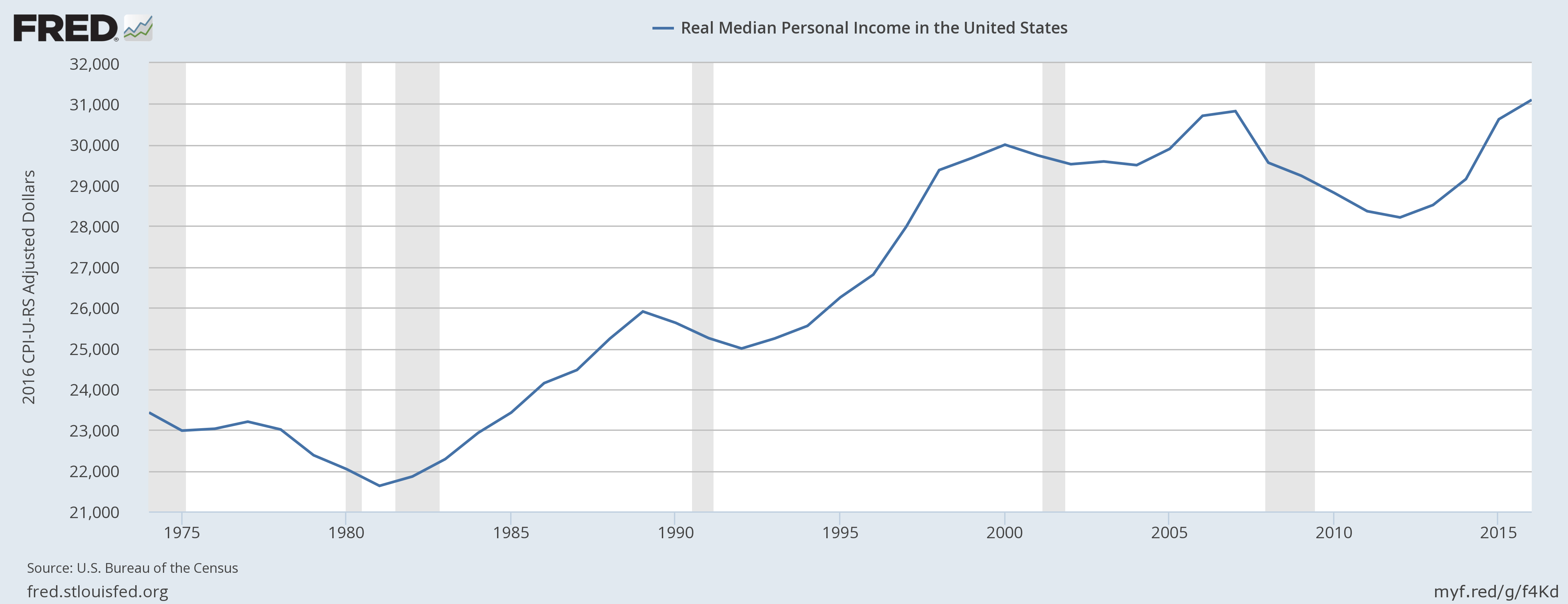
The southern states had, on average, the lowest median household. From 1970 through 2007, median annual household income increased by a total of 41%,. In 2007, the typical household had just.
(It's The Newest Data To This Point In 2022.) You'll Also Find The.
In 1970, the typical household had 3.1 people. By 1995, average family income had increased. The average salary in the united states has been increasing since 1990.
In 1951, The Average Family Income Was $22,401, While The Average Income Of An Unattached Individual Was $8,644.
The 1971 median family income of $10,290 was about 4 percent higher than the 1970. In 2014, the median household income for the middle class stood at. The median income in 2019 was at 45,438 u.s.
U.s Household Income Shares Of Quintiles.
Download scientific diagram | average household income (1970), vancouver cma from publication: Since the 1960s, however, the difference between. What was the median household income in 1970?
Generally Speaking, The Median Income Increases Each Year.
Households having 3 or more vehicles rose from 5.5% in 1970 to 21.9% in 2018. This statistic shows the median household income in the united states from 1970 to 2014, by income tier. Median income of the nation’s families went above $10,000 in 1971 for the first time in u.s.
Post a Comment for "Average Household Income 1970"