Per Capita Income Of Kenya
Per Capita Income Of Kenya. The value for gdp per capita (constant lcu) in kenya was 162,071 as of 2020. Average salary in kenya is 3,519,062 kes per year.
Income is a value in money which offers savings as well as consumption possibilities for individuals. It is, however, difficult to conceptualize. Thus, the definition of income could vary according to the field of study. For this post, we will look at some key elements of income. In addition, we will examine interest payments and rents.
Gross income
A gross profit is total amount of your earnings after taxes. The net amount is the sum of your earnings minus taxes. It is crucial to know the difference between gross and net income to ensure that you know how to report your income. Net income is the more reliable measure of your earnings , as it offers a greater understanding of how much it is that you are making.
Gross income is the revenue an organization earns before expenses. It allows business owners to analyze numbers across different seasons and identify seasonality. It also allows managers to keep track of sales quotas and productivity needs. Knowing the amount a company earns before expenses is essential for managing and expanding a profitable business. It can help small-scale business owners examine how well they're getting by comparing themselves to their competitors.
Gross income is calculated in a broad company or on a specific product basis. For instance, companies can determine profit per product by using tracking charts. When a product sells well and the business earns a profit, it will have greater gross profits as compared to a company that does not sell products or services at all. This helps business owners decide on which products to focus on.
Gross income can include interest, dividends rent income, gambling profits, inheritances, and other income sources. However, it does not include deductions for payroll. If you are calculating your income be sure to take out any tax you are expected to pay. Moreover, gross income should not exceed your adjusted earned income. That's the amount you will actually earn after you have calculated all the deductions you have made.
If you're salariedor employed, you probably already know what earnings are. In most cases, the gross income is the sum that you receive before tax deductions are deducted. This information can be found in your pay-stub or contract. For those who don't possess this information, you can ask for copies.
Gross income and net earnings are critical to your financial plan. Understanding and interpreting them can help you create a schedule for your budget as well as planning for the next.
Comprehensive income
Comprehensive income measures the change in equity over a period of time. It does not include changes in equity due to investments made by owners and distributions made to owners. This is the most widely used method of assessing how businesses perform. It is an extremely crucial aspect of an organization's performance. It is therefore important for business owners to understand this.
Comprehensive earnings are defined by FASB Concepts and Statements no. 6, and includes changes in equity in sources different from the owners the business. FASB generally follows the concept of all-inclusive income, but occasionally it has made exceptions that demand reporting of modifications in assets and liabilities in the financial results. These exceptions are explained in the exhibit 1, page 47.
Comprehensive income comprises the revenue, finance expenses, tax-related expenses, discontinued operations along with profit share. It also includes other comprehensive earnings, which is the distinction between net income as and income on the statement of income and the total income. Additionally, other comprehensive income is comprised of unrealized gains on available-for-sale securities and derivatives that are used to create cash flow hedges. Other comprehensive income can also include the actuarial benefits of defined benefit plans.
Comprehensive income can be a means for companies to provide their users with additional details about their performance. Different from net earnings, this measure also includes non-realized gains from holding and gains from foreign currency translation. While they aren't part of net income, they're important enough to be included in the report. In addition, it provides more comprehensive information about the equity of the company.
Comprehensive income includes gains and losses that are not realized and losses from investments. This is because of the fact that the worth of equity of a company can change during the reporting period. The equity amount is not considered in the calculations of net earnings because it's not directly earned. The differences in value are reflected by the credit section in the balance sheet.
In the coming years and in the coming years, the FASB will continue to improve its accounting guidelines and standards, making comprehensive income a essential and comprehensive measurement. The objective is to offer additional insight about the operation of the firm and improve the ability to forecast future cash flows.
Interest payments
The interest earned on income is taxed at ordinary yield tax. The interest income is added to the overall profit of the company. However, individuals are also required to pay tax upon this income based upon their tax bracket. As an example, if small cloud-based application company loans $5000 in December 15th this year, it's required to pay $1,000 in interest on the 15th of January in the following year. This is a large sum for a small business.
Rents
For those who own property I am sure you've seen the notion of rents as a source of income. What exactly are they? A contract rent is one which is agreed upon by two parties. It could also refer to the extra income that is obtained by a homeowner that isn't obligated to carry out any additional duties. A producer who is monopoly may charge an amount that is higher than a competitor in spite of the fact that he isn't required to perform any additional tasks. A differential rent is an additional revenue created by the soil's fertility. It typically occurs during extensive agricultural practices.
A monopoly may also earn quasi-rents until supply catches up with demand. In this scenario rents can extend the meaning of rents in all kinds of profits from monopolies. But that isn't a sensible limit to the meaning of rent. It is important to know that rents can only be profitable when there's a excess of capital available in the economy.
There are tax implications with renting residential properties. The Internal Revenue Service (IRS) does not allow you to rent residential property. Therefore, the issue of whether or not renting can be an income source that is passive is not an easy question to answer. The answer is contingent upon a number of aspects but the most crucial is the degree to which you are involved with the rental process.
When calculating the tax consequences of rental income, you need be aware of the possible risks when you rent out your home. It's no guarantee that you will never have renters and you may end being left with a vacant house and no money at all. There are also unexpected costs that could be incurred, such as replacing carpets or replacing drywall. Whatever the risk leasing your home can make a great passive source of income. If you're able to keep costs low, it can be an excellent way in order to retire earlier. It could also be used as an insurance against rising prices.
Although there are tax concerns associated with renting a property But you should know that rental income is treated differently from income in other ways. You should consult an accountant or tax advisor before you decide to rent a property. Rental income can comprise late fees, pet charges as well as work done by the tenant as a substitute for rent.
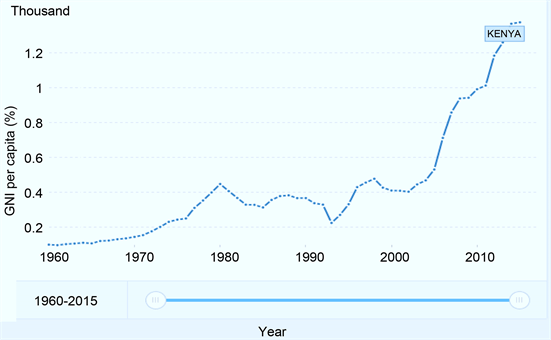
World bank national accounts data, and oecd national accounts data files. The gdp per capita in kenya is equivalent to 13 percent of the world's average. Kenya is the economic, financial, and transport hub of east africa.
The African Island Was, Therefore, The Only.
Gni (formerly gnp) is the sum of value added by all resident producers plus any product taxes (less subsidies) not. Average salary in kenya is 3,519,062 kes per year. Kenya’s real gdp growth has averaged over 5% for the last eight years.
Kenya Gdp Value Was 110 Usd Billion In 2022.
Seychelles recorded the highest gross national income (gni) per capita in africa as of 2020, at 12,720 u.s. The fact that the gcp per capita divides a county’s economic output by its total population makes it a good measurement of a county’s standard of living, especially since it tells you how. Kenya is the economic, financial, and transport hub of east africa.
Real Gdp (Constant, Inflation Adjusted) Of Kenya Reached $58,109,837,754 In 2017.
However, this is inaccurate because gdp per capita is not a measure of personal income. A database on household consumption levels and patterns in developing countries, providing detailed data on household expenditure according to the coicop classification The u.s gdp per capita income at $68,000.
The Gross Domestic Product Per Capita In Kenya Was Last Recorded At 1643.57 Us Dollars In 2021.
46 rows data are in current u.s. Kenya’s real gdp growth has averaged over 5% for the last decade. Over the past 30 years, the value for this indicator has fluctuated between 4,381 in 2019.
Salaries Are Different Between Men.
Gdp per capita is often considered an indicator of a country's standard of living; Since 2014, kenya has been ranked as a lower. Between 2001 and 2020, gdp per capita of kenya grew substantially from 480 to 2,039 us dollars rising at an increasing annual rate.
Post a Comment for "Per Capita Income Of Kenya"